> For the complete documentation index, see [llms.txt](https://docs.akto.io/llms.txt). Markdown versions of documentation pages are available by appending `.md` to page URLs; this page is available as [Markdown](https://docs.akto.io/traffic-connector/aws-services/aws-eks.md).
# Connect Akto with AWS EKS
Learn about how to send API traffic data using AWS EKS to Akto from your environment.
## Introduction
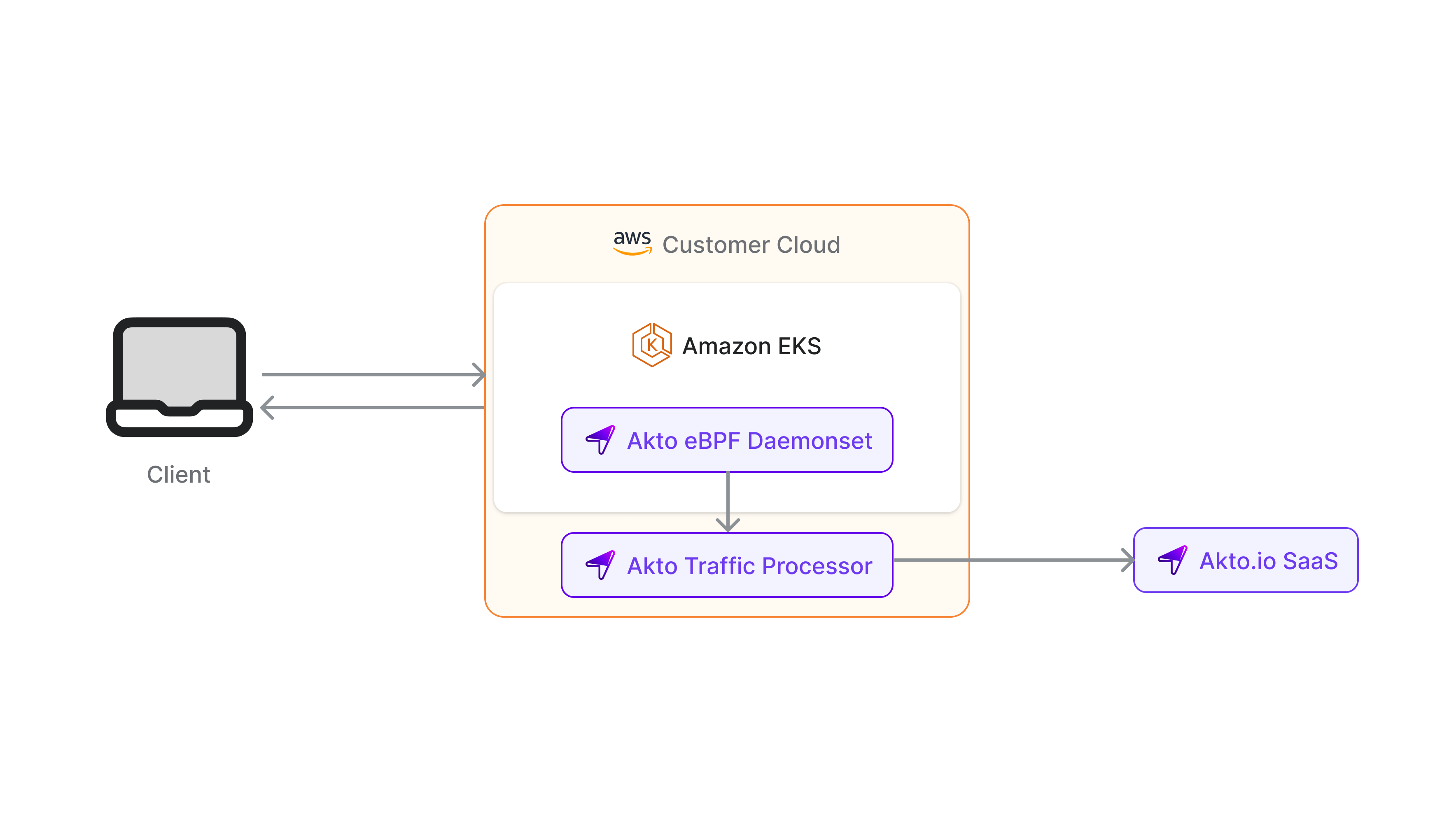
[Akto](https://www.akto.io/) needs your staging, production or other environment's traffic to Discover APIs and analyze for AP misconfiguration. It does so by connecting to one of your [traffic sources](/traffic-connector/traffic-data-sources.md). One such source is AWS EKS.
## Configuring Daemonset
Follow these steps to add daemonset config to your Kubernetes setup -
1\. Go to Quick Start on your Akto dashboard and expand the `Connect traffic data` section.
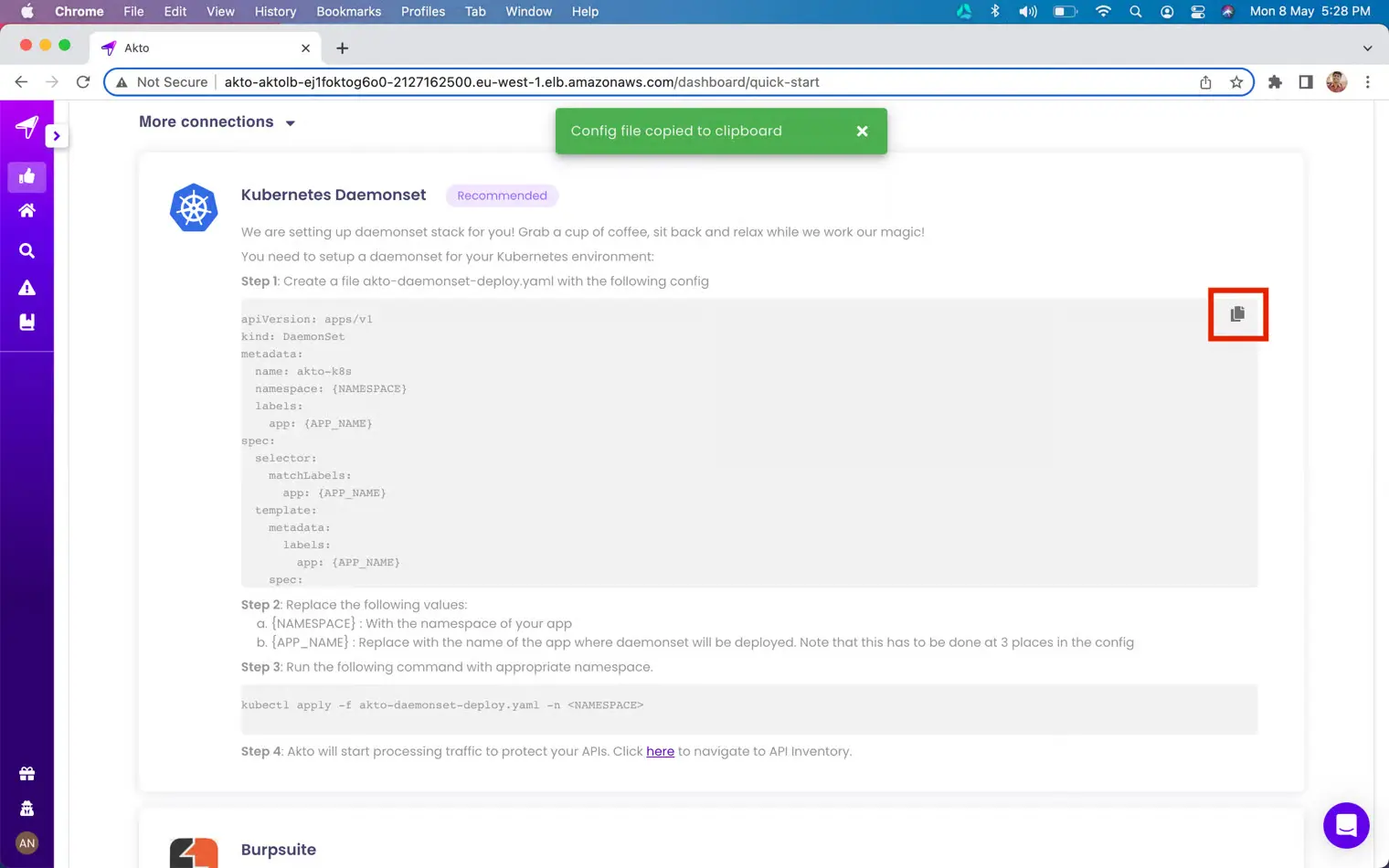
2\. Scroll down to `Kubernetes Daemonset` section.
## Creating AWS Policy
1\. Copy the `policy json` and click on the Akto Dashboard role link.
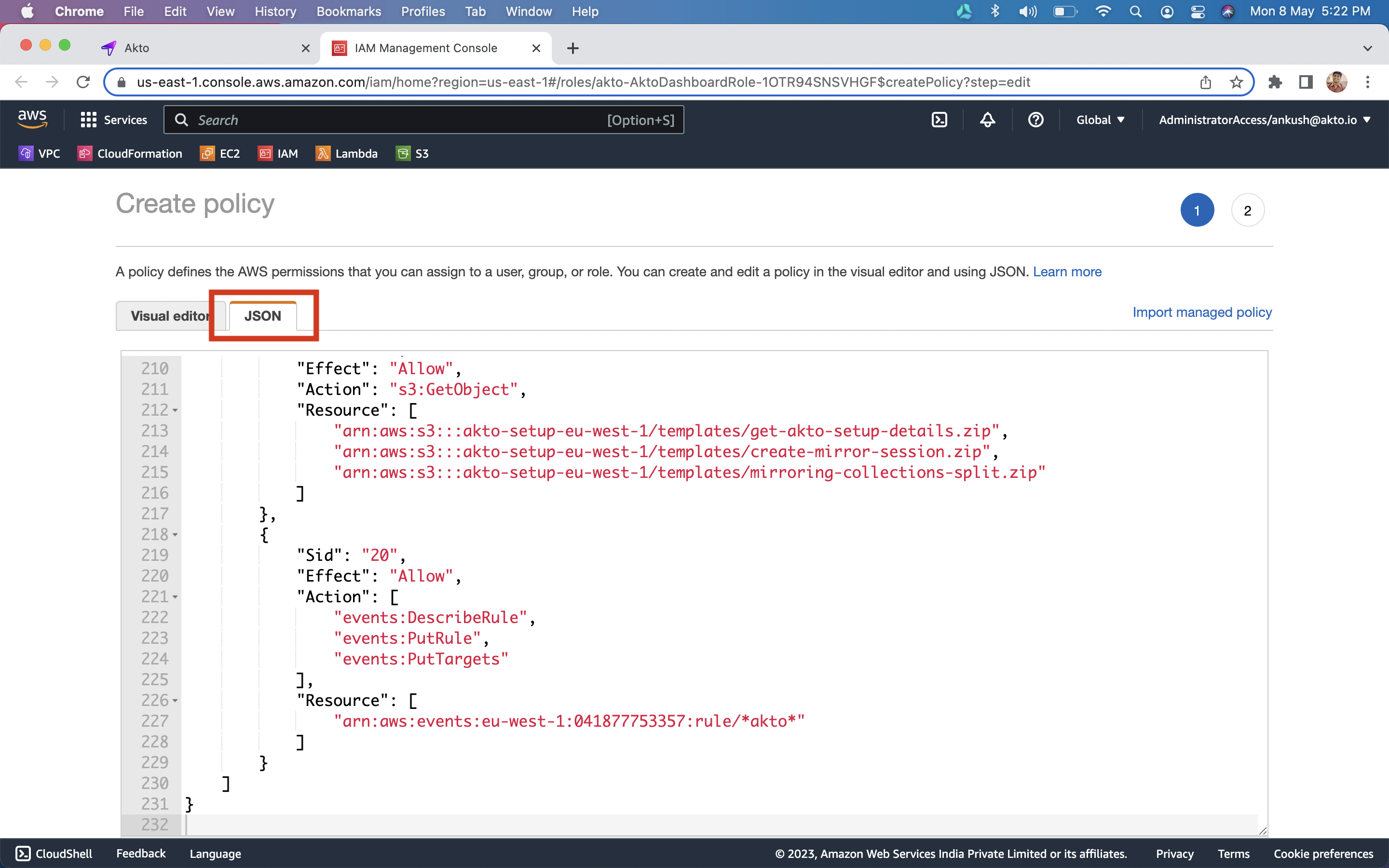
2\. `Click` on the `JSON` tab and `paste the policy`
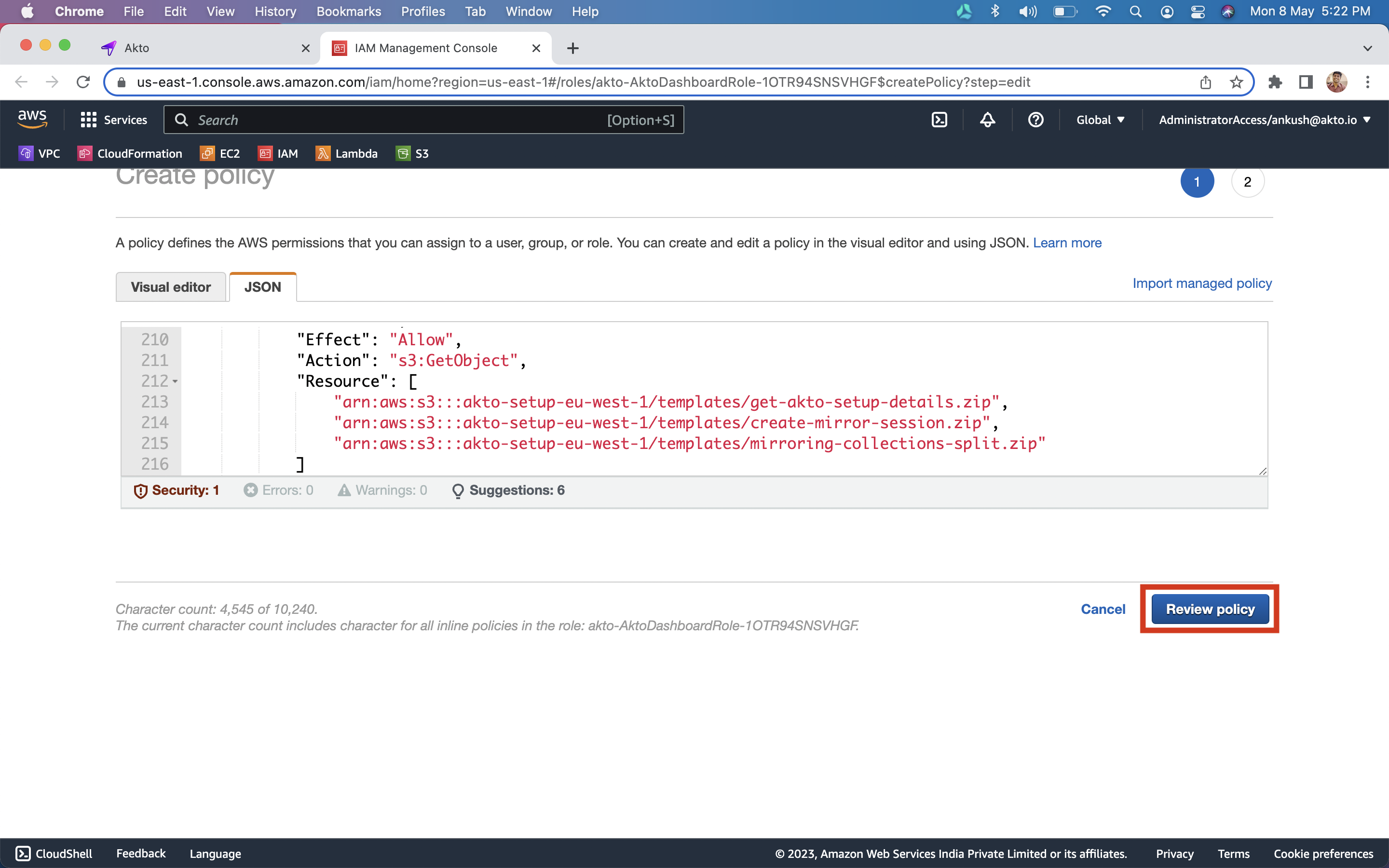
3\. Click on `Review policy` button.
4\. Enter *`AktoDashboardPolicy`* as the policy name and `click` on `Create Policy` button
7\. Once the policy is created, go back to the `dashboard`.
## Setting up Daemonset stack
1\. You should now see a `Setup daemonset stack` button. `Click` on this button to setup a traffic processing stack.
{% hint style="info" %}
This will process your API traffic data and populate APIs on the dashboard. This might take a few minutes to complete.
{% endhint %}
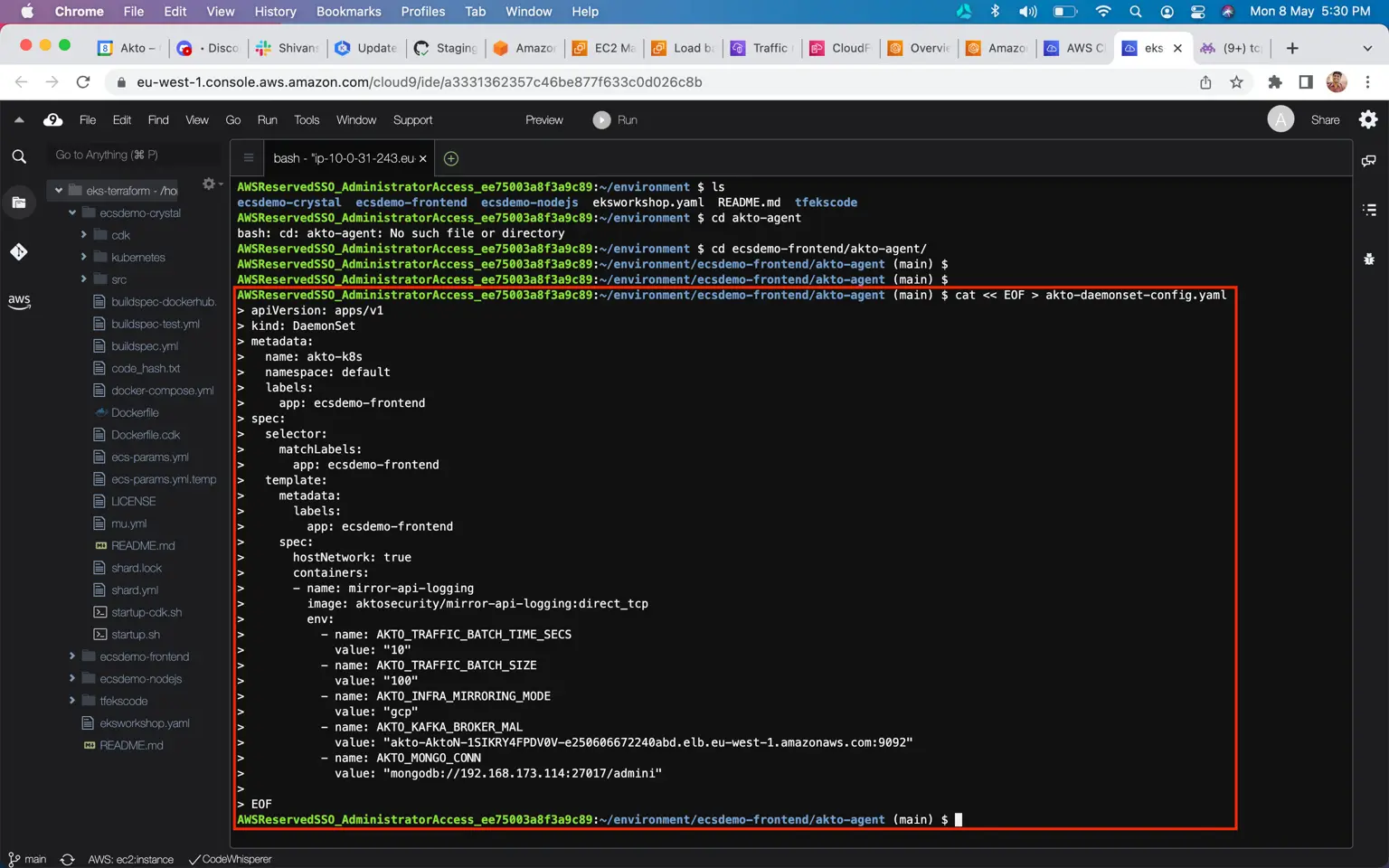
2\. Once complete, you should now see a daemonset config. `Copy the config` and paste in a `text editor`.
3\. Replace `{NAMESPACE}` with your app namespace and `{APP_NAME}` with the name of your app
4\. Create a file `akto-daemonset-config.yaml` with the above YAML config
5\. Call `kubectl apply -f akto-daemonset-config.yaml -n ` on your *kubectl* terminal
6\. Run the command `kubectl get daemonsets` in terminal. It should show *akto-k8s* daemonset.
7\. Go to `API Discovery` on Akto dashboard to see your new APIs
### What's next?
You can now go to your API Inventory to see all the API traffic Akto has captured. Head to [API Discovery](/api-inventory/concepts/api-collection.md) to learn more. Once you start seeing inventory, you can run API Security tests on your APIs. See [Akto's test library](https://www.akto.io/test-library) to select tests you want to run on your APIs.
### Get Support for your Akto setup
There are multiple ways to request support from Akto. We are 24X7 available on the following:
1. In-app `intercom` support. Message us with your query on intercom in Akto dashboard and someone will reply.
2. Join our [discord channel](https://www.akto.io/community) for community support.
3. Contact `help@akto.io` for email support.