# Connect Akto with AWS Fargate

## Introduction

You can use Akto traffic collectors to collect and send traffic to Akto. Your APIs from this traffic will show up in Akto dashboard.

## Creating AWS Policy

1\. Go to Quick Start on your Akto dashboard and expand the `Connect traffic data` section.

<figure><img src="https://user-images.githubusercontent.com/91221068/236832212-603647ca-fceb-46fc-baf7-150c2e6b7ec0.png" alt=""><figcaption></figcaption></figure>

2\. Scroll down to `Data processors setup` section.

<figure><img src="https://user-images.githubusercontent.com/91221068/237100095-67164c73-2a0b-4505-8268-c932df4a1d27.png" alt=""><figcaption></figcaption></figure>

3\. Copy the `policy json` and click on the Akto Dashboard role link.

<figure><img src="https://user-images.githubusercontent.com/91221068/237100542-c3df31bc-9f7d-4be0-a626-038a31d33ce8.png" alt=""><figcaption></figcaption></figure>

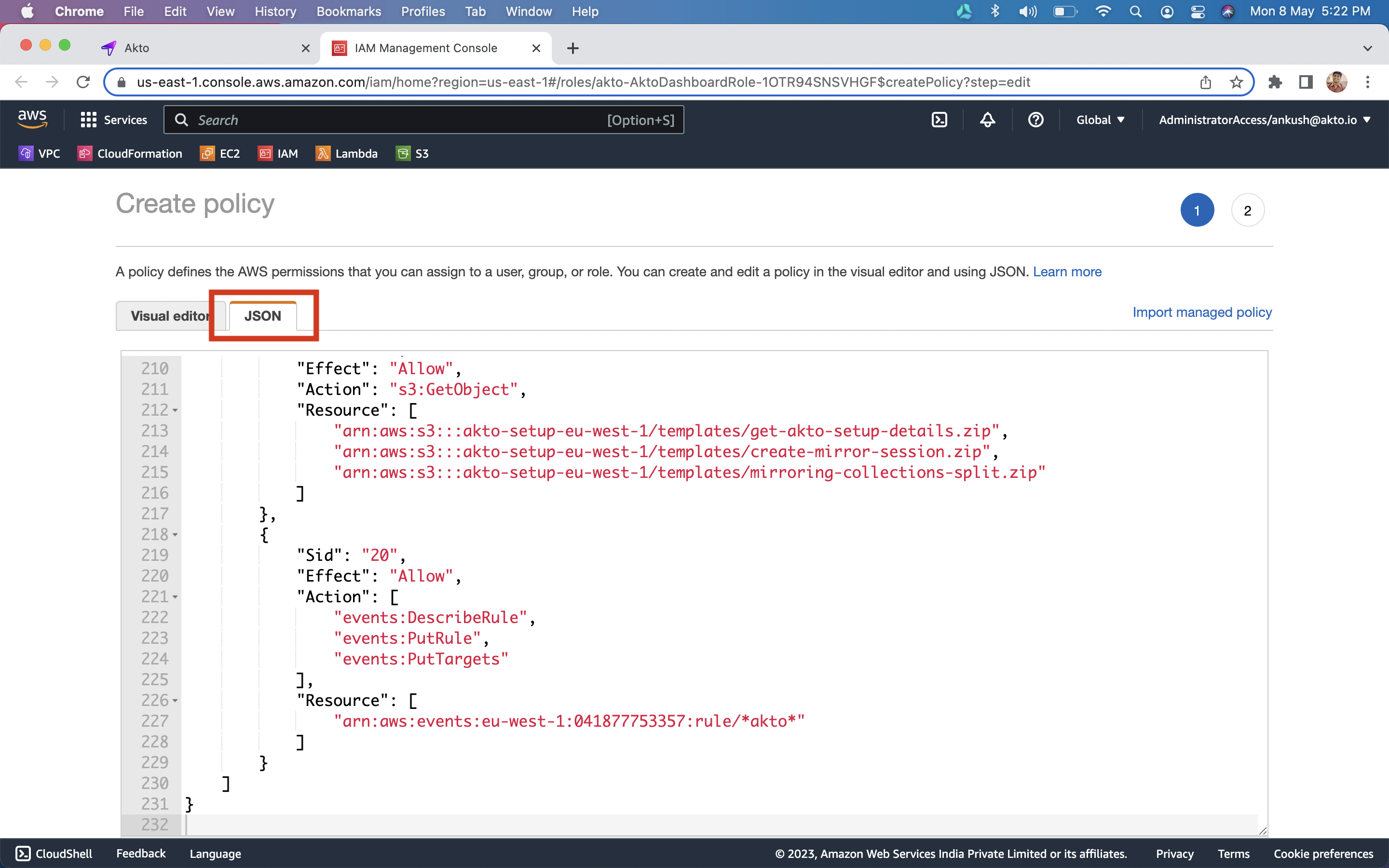
4\. `Click` on the `JSON` tab and `paste the policy`

<figure><img src="https://user-images.githubusercontent.com/91221068/236832279-70340e39-3ccb-4118-9ee9-039711c7e22d.png" alt=""><figcaption></figcaption></figure>

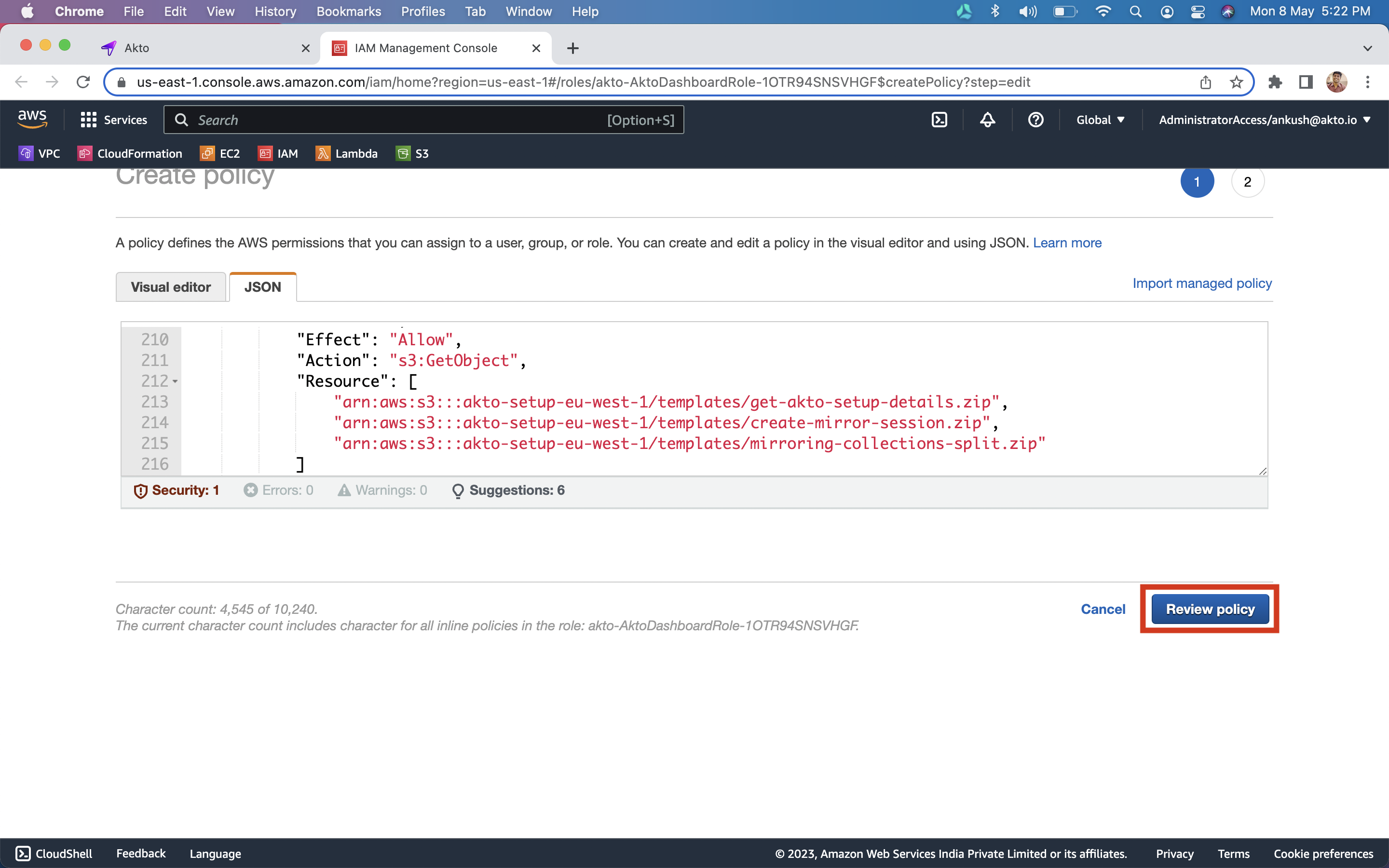
5\. Click on `Review policy` button.

<figure><img src="https://user-images.githubusercontent.com/91221068/236832289-afe2931b-c11a-44b8-a946-79cf0e106dfa.png" alt=""><figcaption></figcaption></figure>

6\. Enter *`AktoDashboardPolicy`* as the policy name and `click` on `Create Policy` button

<figure><img src="https://user-images.githubusercontent.com/91221068/236832299-996d635d-5c0d-43d3-8ee3-eb53f7de952d.png" alt=""><figcaption></figcaption></figure>

8\. Once the policy is created, go back to the `dashboard`.

## Setting up Data processors

1\. Click on `Setup traffic processors` button.

<figure><img src="https://github.com/akto-api-security/Documentation/assets/91221068/c3e08f08-ec81-4c47-b3b0-fbc1eacc4fe0" alt=""><figcaption></figcaption></figure>

2\. This will bring up infra that will process your traffic.

<figure><img src="https://github.com/akto-api-security/Documentation/assets/91221068/7d7d437d-1370-4628-aa10-908b33b907b0" alt=""><figcaption></figcaption></figure>

3\. Check that you have `AKTO_NLB` var once setup is complete.

<figure><img src="https://github.com/akto-api-security/Documentation/assets/91221068/7c79c400-7a0a-4421-96ed-fbb063e025f5" alt=""><figcaption></figcaption></figure>

## Add Akto traffic collector container

1\. Create a container with the following config

```
...
        {
            "name": "akto-traffic-collector",
            "image": "aktosecurity/mirror-api-logging:k8s_agent",
            "environment": [
                {
                    "name": "AKTO_TRAFFIC_BATCH_TIME_SECS",
                    "value": "10"
                },
                {
                    "name": "AKTO_TRAFFIC_BATCH_SIZE",
                    "value": "100"
                },
                {
                    "name": "AKTO_INFRA_MIRRORING_MODE",
                    "value": "gcp"
                },
                {
                    "name": "AKTO_KAFKA_BROKER_MAL",
                    "value": "<AKTO_NLB>:9092"
                },
                {
                    "name": "AKTO_MONGO_CONN",
                    "value": "mongodb://0.0.0.0:27017"
                }
            ]
        }

```

2. Replace `<AKTO_NLB>` by the value shown on the dashboard.
3. Create a container in your Fargate setup with the above config.

   <figure><img src="https://github.com/akto-api-security/Documentation/assets/91221068/f402ee3c-3a77-4b65-850d-3cb97afa4feb" alt=""><figcaption></figcaption></figure>


---

# Agent Instructions: Querying This Documentation

If you need additional information that is not directly available in this page, you can query the documentation dynamically by asking a question.

Perform an HTTP GET request on the current page URL with the `ask` query parameter:

```
GET https://docs.akto.io/traffic-connector/aws-services/aws-fargate.md?ask=<question>
```

The question should be specific, self-contained, and written in natural language.
The response will contain a direct answer to the question and relevant excerpts and sources from the documentation.

Use this mechanism when the answer is not explicitly present in the current page, you need clarification or additional context, or you want to retrieve related documentation sections.